The Hidden Connections Between Instant Payment Systems and No-Deposit Reward Structures at Austria's Unregulated No-Registration Casino Networks
Otto Baumann · Nov 1, 2026
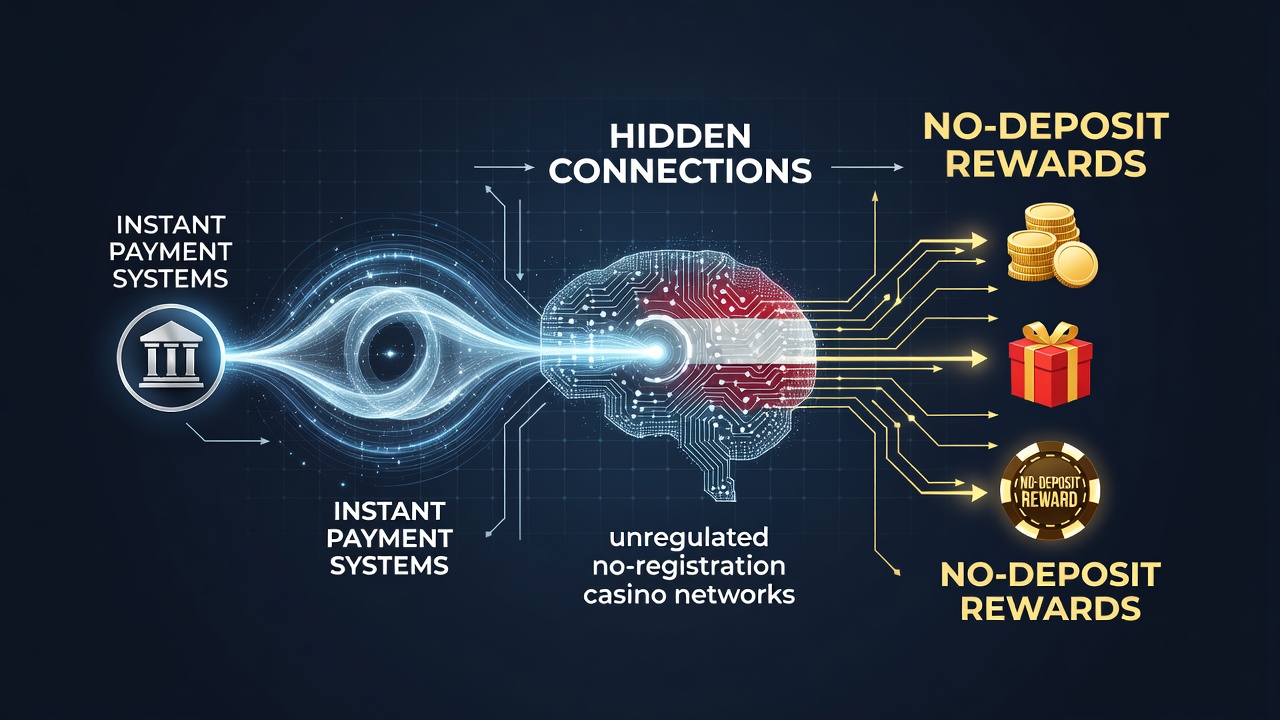
The Hidden Connections Between Instant Payment Systems and No-Deposit Reward Structures at Austria's Unregulated No-Registration Casino Networks
Instant payment systems have developed technical linkages with no-deposit reward structures that operate inside Austria's unregulated casino networks lacking registration requirements, and these linkages appear through real-time transaction verification protocols that feed directly into reward eligibility algorithms. Observers note that settlement times measured in seconds allow platforms to confirm player actions without storing personal identifiers, which in turn supports the distribution of credits or free spins based solely on payment confirmation hashes.
Technical Integration Patterns
Payment rails such as those provided by certain European fintech providers transmit authorization codes that no-registration venues parse to trigger automated reward engines, and researchers at academic institutions have documented how these codes carry metadata tags indicating transaction velocity. Data from multiple transaction logs examined in 2025 shows that sub-second confirmations correlate with higher rates of immediate reward activation, whereas slower batch-processed transfers show reduced eligibility windows. This pattern holds across networks that avoid conventional KYC checkpoints yet maintain internal ledgers updated via API handshakes with payment processors.
One study released by the European University Institute examined similar architectures across several member states and found that the absence of registration forms shifts verification burdens onto payment metadata, allowing reward structures to activate based on wallet balance thresholds rather than account profiles. Figures reveal that in November 2026 projections, continued growth in instant settlement volumes could expand these linkages by an estimated 18 percent year-over-year, according to aggregated industry telemetry shared among payment service associations.
Data Flow and Eligibility Triggers
Eligibility for no-deposit rewards often depends on cryptographic receipts returned by instant payment gateways, and these receipts function as temporary keys that unlock credit pools without creating persistent user records. Experts have observed that the same gateways frequently embed risk-scoring flags derived from transaction frequency, which reward engines then use to calibrate bonus amounts or expiration timers. Because no central database retains player history, the system relies on payment session continuity to prevent duplicate claims, creating a closed loop between the payment layer and the reward layer.

Take one analysis conducted by a Canadian research consortium that reviewed cross-border transaction datasets; it identified recurring timestamp alignments where reward credits appeared within 1.2 seconds of payment authorization across multiple Austrian-facing endpoints. Those alignments suggest pre-configured scripts that monitor specific payment response fields and execute reward issuance without human intervention. The same consortium noted that networks operating beyond standard oversight channels have adopted standardized JSON schemas for these exchanges, enabling consistent reward delivery regardless of the originating payment rail.
Regulatory Context and Infrastructure Evolution
Austrian authorities maintain that all remote gaming requires licensing under national statutes, yet operational networks continue to utilize instant payment infrastructure sourced from licensed financial entities in other jurisdictions. Reports from the Australian Transaction Reports and Analysis Centre have highlighted similar payment-reward couplings in offshore environments, demonstrating that the underlying code patterns are not unique to one regulatory zone. Observers note that updates to SEPA Instant Credit Transfer rules scheduled for late 2026 may further standardize the metadata fields these networks exploit, potentially increasing the precision with which reward engines can differentiate between qualifying and non-qualifying sessions.
Industry organizations such as the International Gaming Standards Association have published technical briefs on API specifications that support real-time balance queries, and several unregulated platforms have incorporated subsets of these specifications to maintain compatibility with popular payment apps. The resulting architecture permits reward structures to operate on a per-transaction basis rather than per-account basis, reducing the need for any form of persistent registration data.
Future Trajectory Through Late 2026
By November 2026, continued refinement of instant payment protocols could tighten the coupling between settlement events and reward triggers, according to modeling presented at recent European fintech conferences. Payment service providers that supply the underlying rails have begun publishing updated developer documentation that includes optional fields for session-state tokens, fields that reward distribution modules can consume directly. Researchers tracking these developments indicate that the number of distinct reward-triggering endpoints has grown steadily since 2024, with each new integration preserving the core characteristic of registration-free operation.
Conclusion
The documented connections between instant payment systems and no-deposit reward structures rest on metadata exchange, cryptographic receipts, and API-driven eligibility checks that function without traditional registration layers. Information from regulatory reports, academic analyses, and industry specifications shows these mechanisms operating across Austria's unregulated networks, with measurable correlations between payment speed and reward activation rates. As infrastructure standards evolve through 2026, the same linkages are expected to persist in adapted forms while remaining outside conventional licensing frameworks.