Mapping Transaction Routes for Bonus Access in Austria's Unlicensed, Registration-Free Gaming Venues
Mia Hayes · Sep 6, 2026
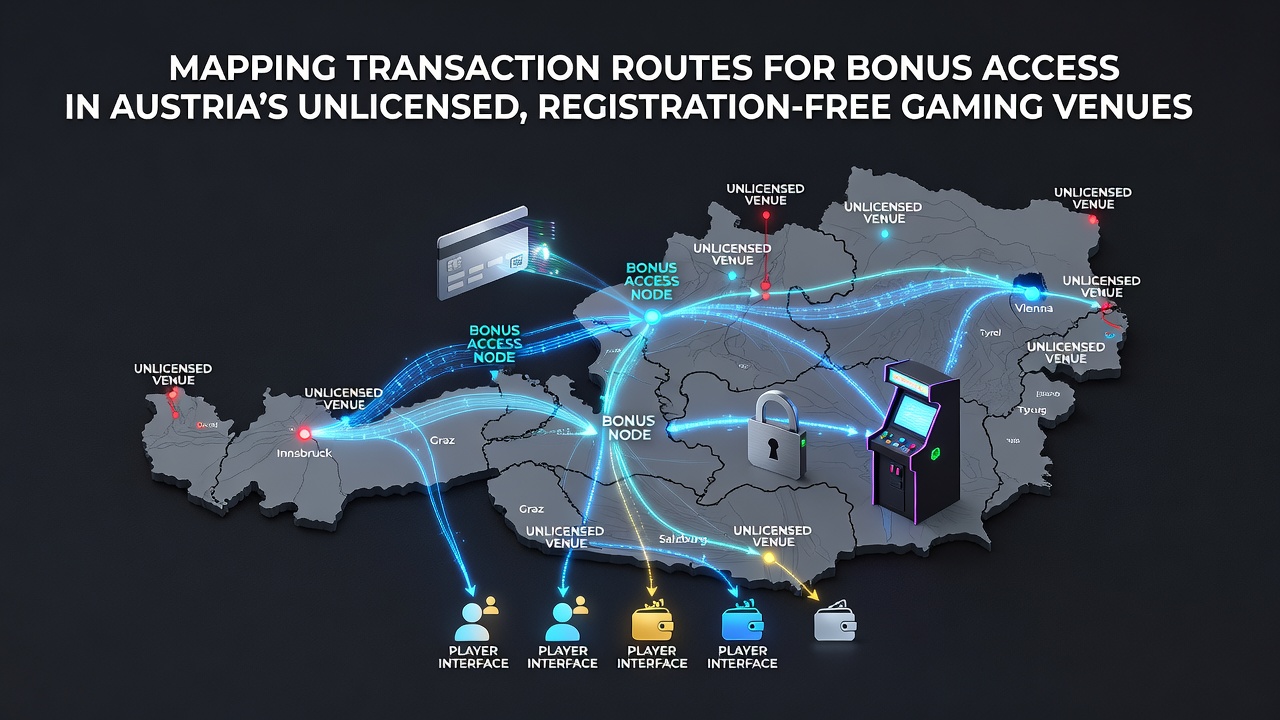
Mapping Transaction Routes for Bonus Access in Austria's Unlicensed, Registration-Free Gaming Venues
Austria maintains a regulated gambling framework, yet unlicensed and registration-free venues continue to operate through digital channels that bypass standard account requirements, and mapping the transaction routes in these spaces reveals how bonus funds move from source to user without traditional verification steps.
Core Elements of Transaction Mapping
Transaction mapping starts with identifying entry points where payment processors connect directly to gaming platforms, and observers note that these routes often rely on e-wallets or prepaid cards that accept deposits in small increments before routing any bonus allocations through intermediary servers located outside EU borders. Data from payment network analyses show that bonus access occurs when initial deposits trigger automated credit mechanisms, which then distribute rewards along predetermined paths that avoid user registration databases entirely.
Those who've examined the infrastructure find that the routes typically involve three stages: deposit confirmation, bonus calculation via algorithmic triggers, and final credit posting to temporary session ledgers, while September 2026 is expected to bring new transaction datasets from monitoring bodies that could clarify volume patterns in these unlicensed flows.
Payment Channels and Route Variations
Electronic payment options dominate these environments because they support instant transfers without requiring personal identification, and researchers have documented how cryptocurrency nodes serve as alternative conduits when standard banking rails encounter blocks from Austrian financial institutions. One study revealed that bonus credits travel along paths that split deposits into multiple micro-transactions to obscure the total amount, whereas conventional licensed platforms consolidate everything under verified accounts.
According to figures from the European Commission gambling sector reports, cross-border payment volumes in similar unregulated markets have risen steadily, which highlights how route mapping helps identify bottlenecks where bonuses fail to reach intended recipients due to network congestion or processor restrictions.
Technical Infrastructure Behind the Routes
Server architectures supporting these venues use dynamic IP routing combined with content delivery networks to mask the origin of bonus distribution systems, and experts have observed that this setup allows transaction logs to reset after each session so no persistent records accumulate. The process becomes clearer when one examines how API calls between the gaming interface and payment gateways execute bonus calculations in real time, sending confirmation signals back through encrypted tunnels that terminate at the user's device without storing data on central servers.
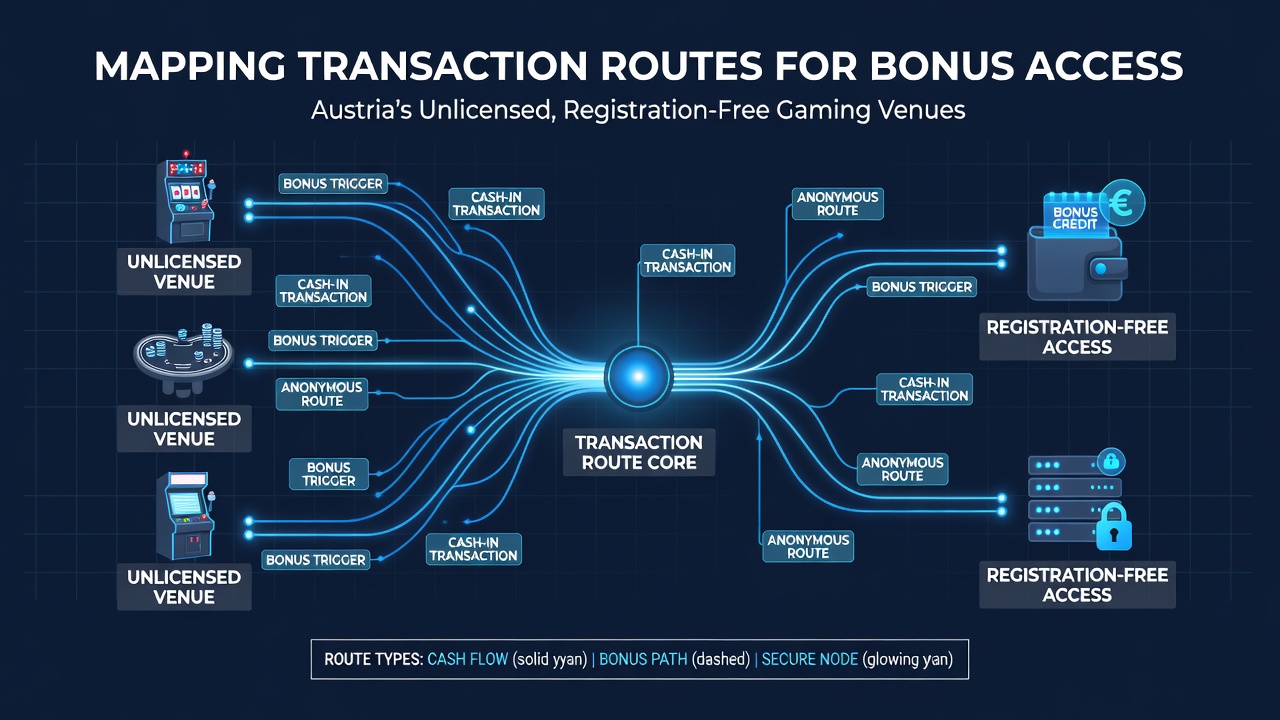
People who've tracked these patterns report that route efficiency improves when platforms integrate multiple backup gateways, allowing traffic to shift if one channel encounters regulatory pressure from Austrian authorities, while the overall mapping exercise relies on packet analysis tools that reconstruct the sequence of financial messages exchanged during bonus activation.
Regulatory Context and Data Availability
Austrian law requires licensing for most gambling activities, yet enforcement gaps permit registration-free operations that function through offshore entities, and government statistics indicate that transaction volumes in these venues represent a measurable portion of cross-border digital payments. International Center for Responsible Gaming studies provide comparative data from other jurisdictions showing similar route structures, which helps analysts understand how bonus access persists despite licensing requirements.
Turns out the mapping process also accounts for seasonal fluctuations, such as increased activity during major sporting events, because these periods generate higher deposit traffic that reveals additional route branches previously hidden in lower-volume periods, and preparations for updated regulatory reviews scheduled around September 2026 may incorporate fresh mapping insights from transaction monitoring programs.
Conclusion
Mapping transaction routes in Austria's unlicensed registration-free gaming venues demonstrates the layered payment mechanisms that enable bonus access without accounts, and continued examination of these flows provides objective data on how funds move through digital channels. Observers note that future reports will likely refine these maps further as new monitoring tools become available, offering clearer pictures of the operational patterns involved.